
Excavating an Old Excavation: Thomas Kiely and the British Museum's Cyprus
Thomas Kiely has never directed a dig in Cyprus. As the British Museum's curator of its ten thousand Cypriot objects, his excavations are of paper: the Victorian notebooks and consular letters that record where the objects came from, and from them he has rewritten how the island was dug.
Alexis Drakopoulos
February 23, 2026·History · Collecting · Archeology·10 min read


Share


Alexis Drakopoulos is a Greek Cypriot Machine Learning Engineer working in Financial Crimes. He is passionate about Archeology and making it accessible to everyone. About Me.
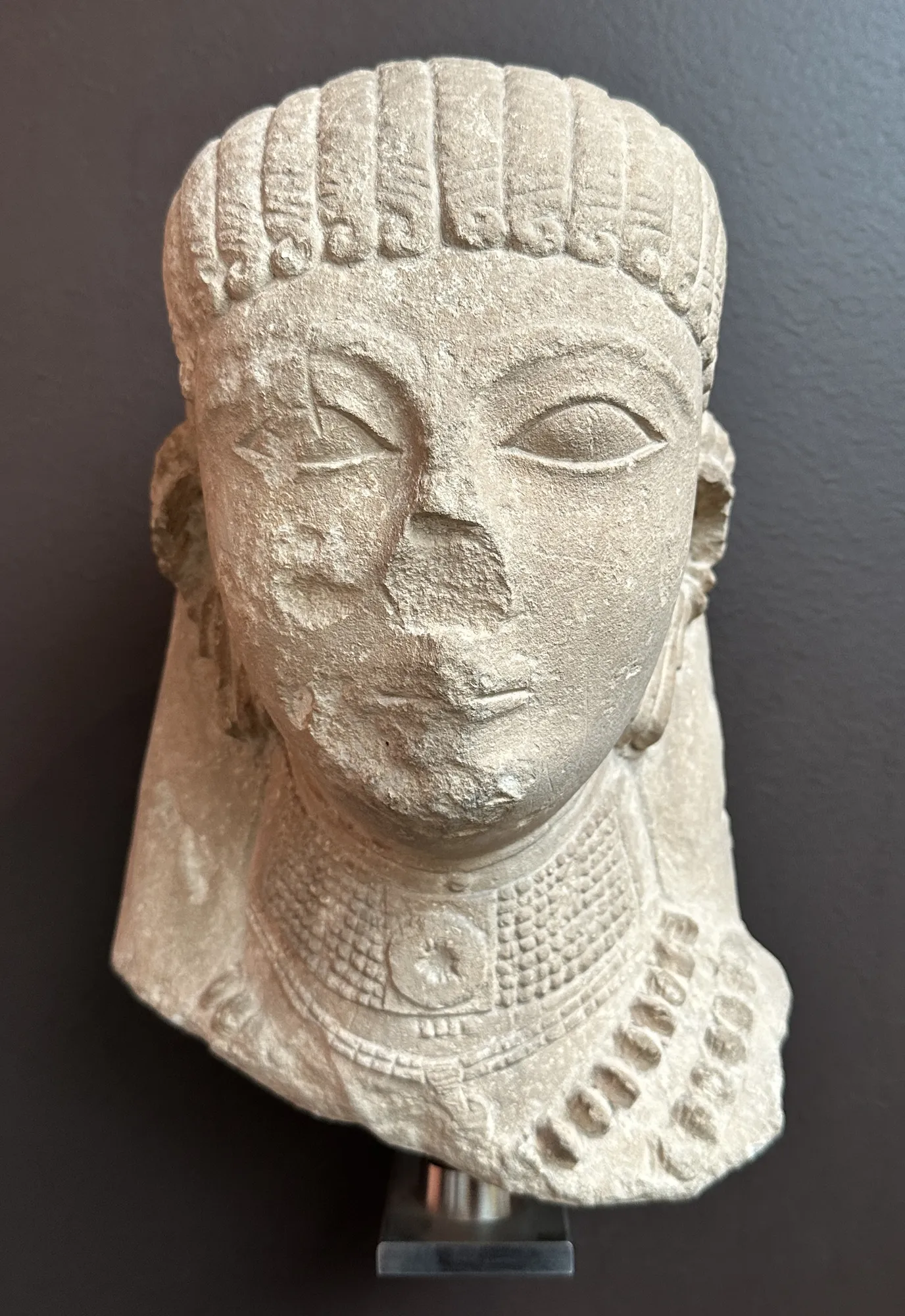
In the first months of 1895, an assistant from the British Museum named H.B. Walters dug tombs at Kourion, on the south coast of Cyprus, and kept a notebook as he went. He was there to fill display cases in Bloomsbury, and the notebook was a working tool, terse and provisional, the kind of record a man keeps when he expects to be its only reader. More than a century later Thomas Kiely sat down with it and read it as the single most important document from the dig: the only surviving account of where several hundred of the Museum's Cypriot objects had actually come from.
Kiely is the A.G. Leventis Curator for Ancient Cyprus at the British Museum, responsible for more than ten thousand objects pulled out of the island in the nineteenth century. Almost none of them arrived with what an archaeologist now calls context: the tomb, the layer, the things lying alongside, the position in the ground that fixes what an object meant and when. The Victorians who dug Cyprus wanted the objects. The context they left in the spoil heap, or noted in haste in books like Walters's, or did not record at all. Kiely's essay on the Kourion notebook, published in 2009, carries a title that doubles as a description of his career: "Excavating an Old Excavation" [1].
The prehistorian who fell for the archive
He did not set out to do this. Kiely trained as a prehistorian, with an Oxford doctorate on settlement and burial in Cyprus across the Late Bronze Age and the early Iron Age, the second millennium giving way to the first [3]. That is the apprenticeship of someone who expects to dig, to publish tombs and house plans and pottery sequences of his own. He joined the British Museum in 2006, and the archive caught him. In a 2021 interview he recalled having treated the history of archaeology as "a sideshow" until he began working inside the Museum's records, at which point, in his words, he "got hooked" [4].
What hooked him was the texture of early documentation, its gaps and its guesses. He points to the field notebooks of John Myres, the Oxford scholar who dug at Amathus in the 1890s, as showing "the discipline coming into being" on the page, the moment when collecting finds turned into recording them [4]. At a 2017 workshop he put it more bluntly: "I love bad data" [5]. The line is a working principle. Bad data, the partial and self-serving records of nineteenth-century excavation, is precisely the material his method exists to read.
Emma Turner's two thousand pounds
The collection that caught him was itself a product of bad data and private money. In 1892 a woman named Emma T. Turner left the British Museum two thousand pounds to excavate in Cyprus. Out of that legacy came three campaigns in three years: Amathus, where A.H. Smith and the young John Myres worked from late 1893; Kourion, where Walters dug in 1895; and Enkomi, where A.S. Murray opened the Late Bronze Age tombs in 1896. The report, Excavations in Cyprus, appeared in 1900 under the names of Murray, Smith and Walters, with Turner's bequest on the title page [2]. One woman's will paid for the digging, a handful of Museum men ran it, and they recorded it as they had time. The objects travelled north by the crate. The information about them stayed in Cyprus, or in the notebooks, or nowhere.
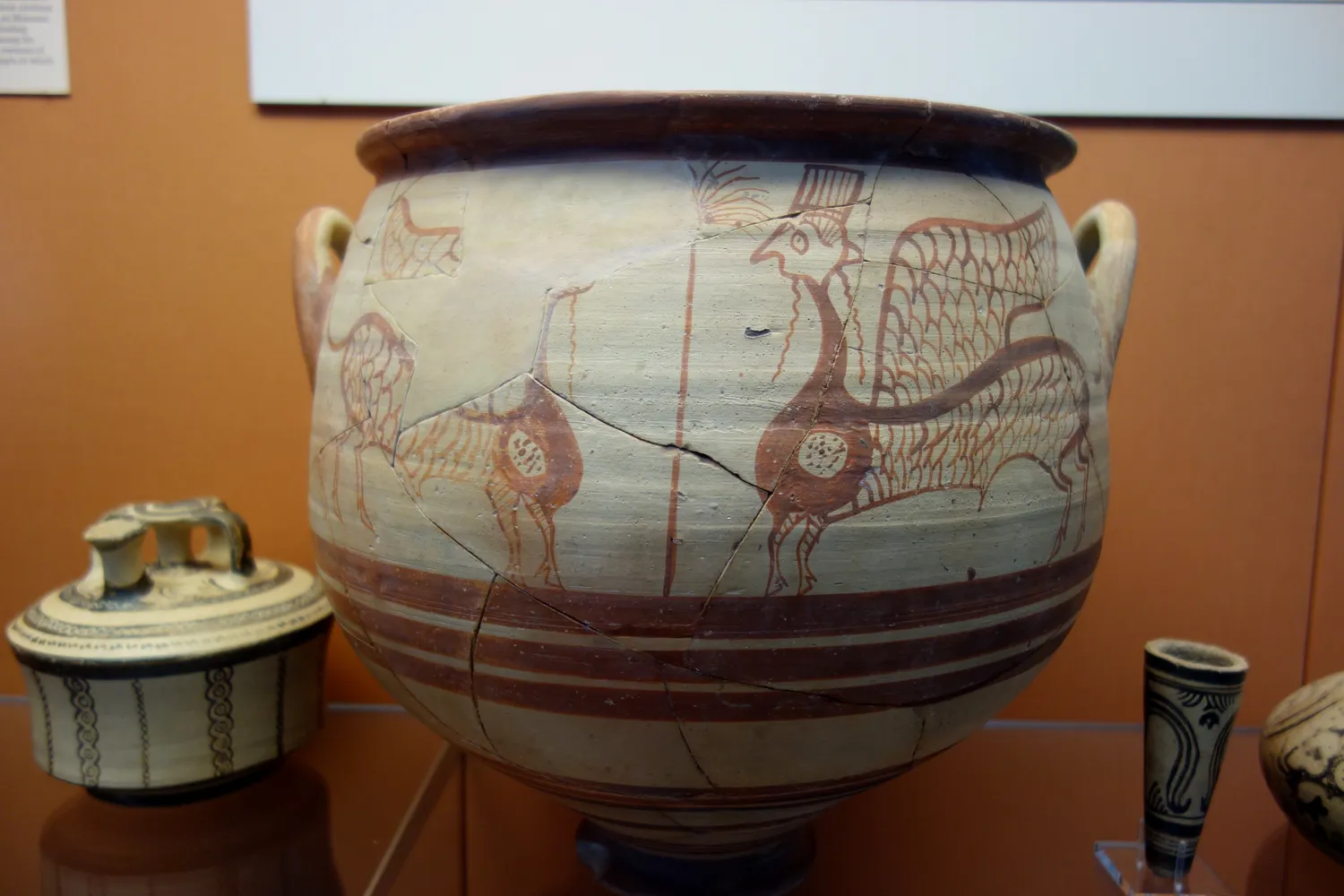
Kiely's central work at the Museum has been to put that information back. Since 2006 he has run the Cyprus Digitisation Project, funded by the A.G. Leventis Foundation, building an object-by-object online catalogue of the whole Cypriot collection: more than ten thousand items from over forty cemeteries, shrines and settlements, dating between roughly 5000 BC and AD 500, together with the letters, photographs and field notebooks that document them [6]. The published catalogue, Ancient Cyprus in the British Museum, opened with Enkomi, more than seventeen hundred objects from the 1896 tombs re-entered with whatever provenance the archive could be made to give up, alongside essays on the excavation's own history [6]. The sections that followed kept the pattern. The catalogue of the objects and the history of how they were dug are the same file.
The name on the silver cup
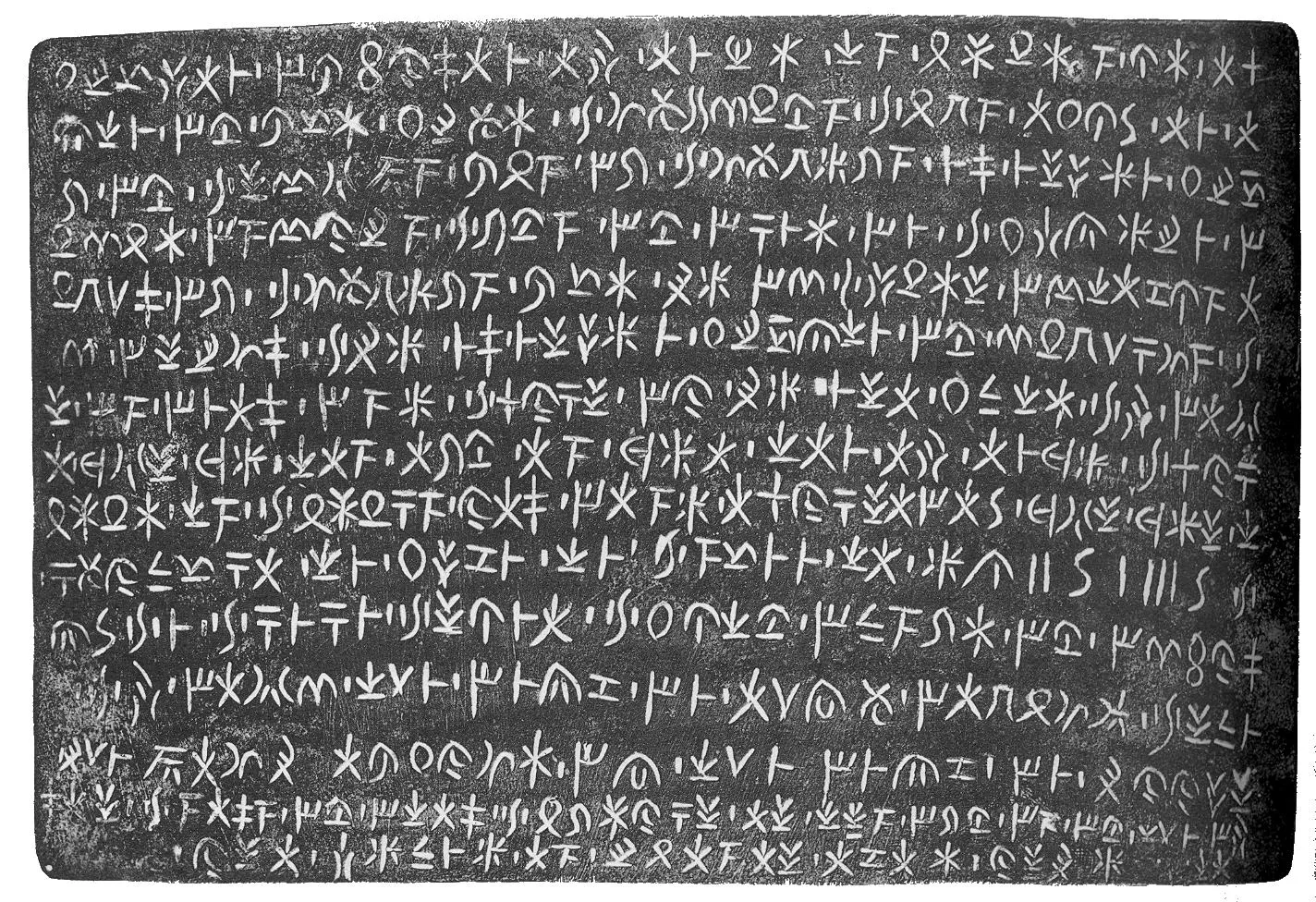
What this restores is sometimes a findspot and sometimes something sharper. Among the things Walters dug at Kourion in 1895 was a small silver cup, a mastos shaped like a breast, from Tomb 80. It sat in the Museum for over a century before Kiely and the epigrapher Massimo Perna photographed it at high resolution and put it under X-ray, and found an incised inscription in the Cypriot syllabary, the island's own writing system, naming a priest called Onisas [7]. The cup had been dug, catalogued and shelved; the text on it had never been read. It was one of four such pieces the two published in 2010, syllabic inscriptions recovered from long-held, long-overlooked objects, the signs in several cases invisible to the eye until the imaging brought them up [7].
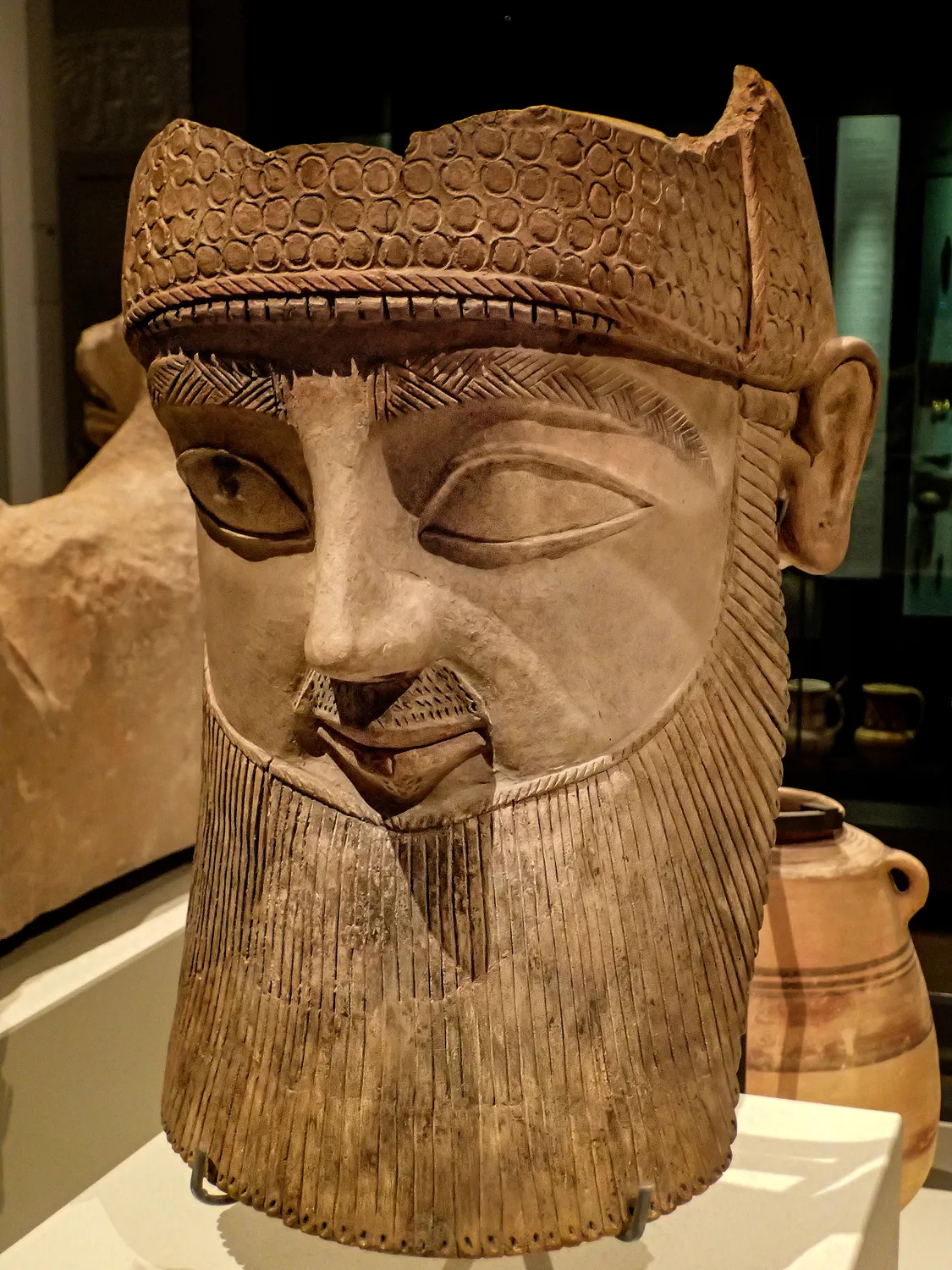
The same method works at the scale of a building. In 1890 the Cyprus Exploration Fund dug a mound called Toumba near Salamis and found a sanctuary, its favissa, the pit where a temple buries its worn-out offerings, packed with large painted terracotta figures. The figures were divided up and scattered across the museums of Europe, and the sanctuary, as anything you could study, ceased to exist. Working with Vassos Karageorghis, who had run the Cypriot Department of Antiquities for twenty-six years, Kiely led the archival research that found the dispersed pieces again, traced them museum by museum, and reassembled the deposit on paper: around three hundred fragments sorted into six types of figure, read as the output of a single workshop in the seventh century BC, when Cyprus paid tribute to Assyria [8]. Salamis-Toumba appeared in 2019. The dig had taken the sanctuary apart and lost the plan. The book put it back together from the records the diggers left behind.
How Britain actually dug Cyprus
That is the close work. The wide view is a pair of papers that have quietly become the standard account of how the British came to dig Cyprus at all. "Britain and the Archaeology of Cyprus," written with Anja Ulbrich, the Leventis curator at the Ashmolean and Kiely's counterpart in Oxford, runs in two parts: the long nineteenth century, in 2012, and 1914 onward, in 2017 [9][10]. The argument cuts against the obvious one. British involvement with Cypriot antiquities looks, from a distance, like an arm of empire, especially after Britain took the island from the Ottomans in 1878. Up close it was nothing so organised. It was consuls collecting for their own reasons, dealers working the market, rival museums bidding against one another, and a colonial administration that gave archaeology almost no official support.
Charles Newton, a keeper at the British Museum, argued in an Edinburgh Review essay of 1879 that Cyprus was the strategic exception: the one place where the tightening Greek and Ottoman restrictions on excavation did not yet bite, and where Britain should therefore dig [11]. The Museum turned down Lord Kitchener's proposal to excavate there in 1880 as too costly, and the 1878 occupation arrived with no official British expedition behind it. The case that clinches the survey is Max Ohnefalsch-Richter, a German who in those same years dug Cyprus at once for the British Museum, for other European institutions, and for private clients, his loyalty running to whoever was paying [9]. If a German could excavate Cyprus for the British Museum while supplying half of Europe besides, then what organised the work was the market and the web of private interest around it, with nationality almost incidental.
The second part carries that argument into the twentieth century and finds the same shape. After Britain annexed Cyprus outright in 1914, the substantial British contributions came again from private hands rather than state money, and a striking number of those hands were women's. Joan du Plat Taylor, Veronica Seton-Williams, Eleanor Stewart, Eve Dray: the fieldwork and recording of mid-century British archaeology in Cyprus ran heavily on women's labour, much of it unpaid and most of it left out of the state-centred histories [10]. The Department of Antiquities was founded in 1935, James Stewart's dig at Vounous in 1937 counts as the first properly British excavation on the island, and after independence the initiative passed to university teams. Kiely's two papers put the consuls, the dealers, the patrons and the unpaid women back into a story that had been told as imperial policy.
The curator who cannot give things back
In 2025 he made the argument collective. Empire and Excavation, which he edited with Anna Reeve and Lindy Crewe, gathers twenty-three papers on archaeology in British-period Cyprus between 1878 and 1960, contributors including Bernard Knapp, Despina Pilides and Vasiliki Kassianidou [12]. The framing is openly critical: Cyprus as a case study in how a discipline grew up alongside an empire, who laboured under colonial rule, how excavated material was exported and where it travelled, how anti-looting law was written and then not enforced. Kiely supplied the introduction and, with his frequent co-author Robert Merrillees, a chapter on the founding of the Cyprus Exploration Fund [12]. He convenes the field as much as he writes it: the volume, the workshops he has run since 2017 to link the Cypriot holdings of British regional museums, his place in the UCL history-of-archaeology network [5]. The sideshow is now the thing he organises.
This work sits inside an institution that does not give things back. The British Museum is bound by the British Museum Act of 1963, which sharply limits what it can deaccession, and it has held firm against restitution. A curator there works with documentation, loans, access and transparency; return is not among his instruments. Kiely writes no restitution polemics. What he does instead is make the colonial history of acquisition legible: who dug, who paid, who carried, under what law and what absence of law. His conference paper on the Museum's agents in Cyprus between 1893 and 1899 he titled "Poachers turned gamekeepers?" [13]. To reconstruct a findspot is also to reconstruct how an object left the island, and that record is the precondition for any later argument about where it belongs, whoever ends up making it.
The post itself belongs to the same history. Like Emma Turner's two thousand pounds, it is private money: the A.G. Leventis Foundation, the diaspora philanthropy that endows Cypriot curatorships across the museums of the West, in Oxford, Paris, Cambridge and London, and that has also bought looted Cypriot antiquities on the open market and handed them to the Cyprus Museum [14]. The same fund interprets Cyprus abroad and repatriates it home.
Walters filled his cases and went home. The most useful thing he carried back from Kourion turned out to be the notebook, and the cup from Tomb 80 sat in its case for more than a century before anyone read the name scratched into its silver.
References
- 1.Kiely, T. (2009). The Kourion Notebook in the British Museum: Excavating an Old Excavation. In T. Kiely (ed.), Ancient Cyprus in the British Museum: Essays in Honour of Veronica Tatton-Brown (British Museum Research Publication 180), pp. 63–100. London: British Museum.
- 2.Murray, A. S., Smith, A. H., & Walters, H. B. (1900). Excavations in Cyprus (Bequest of Miss E. T. Turner to the British Museum). London: British Museum (repr. 1969).
- 3.Sidestone Press, author page for Thomas Kiely (publisher biography), https://www.sidestone.com/authors/kiely-thomas. DPhil, University of Oxford, on settlement and burial practices in Cyprus in the Late Bronze Age and early Iron Age; A.G. Leventis Curator for Ancient Cyprus, British Museum.
- 4.Dr Thomas Kiely, 'Historians of Archaeology' interview, History of Archaeology Network, UCL Institute of Archaeology, 14 January 2021, https://historyofarchaeologyioa.weebly.com/historians-of-archaeology/dr-thomas-kiely ('a sideshow'; 'got hooked'; the John Myres field notebooks as 'the discipline coming into being').
- 5.'Exploring Ancient Cyprus in UK Museums: a workshop at the British Museum, 15th June 2017,' Ancient Worlds Manchester, 18 June 2017, https://ancientworldsmanchester.wordpress.com/2017/06/18/ (the 'I love bad data' remark; the Specialist Subject Network for Cypriot collections in UK regional museums).
- 6.Cyprus Digitisation Project and the online research catalogue Ancient Cyprus in the British Museum (ed. T. Kiely, 2009–, ongoing), British Museum; the collection comprises over 10,000 objects from over 40 cemeteries, shrines and settlements, c. 5000 BC to AD 500, with the first published section (Enkomi) recording 1,700+ objects.
- 7.Kiely, T., & Perna, M. (2010). Four Unpublished Inscriptions in Cypriot Syllabic Script in the British Museum. Kadmos (De Gruyter), 49, pp. 93–116.
- 8.Karageorghis, V., & Kiely, T. (2019). Salamis–Toumba: An Iron Age Sanctuary in Cyprus Rediscovered (Excavations of the Cyprus Exploration Fund, 1890). With contributions by A. Christophilopoulou, G. Constantinou & A. Ulbrich. Nicosia: The Cyprus Institute.
- 9.Ulbrich, A., & Kiely, T. (2012). Britain and the Archaeology of Cyprus. I. The long 19th century. Cahiers du Centre d'Études Chypriotes, 42, pp. 305–356.
- 10.Kiely, T. (2017). Britain and the archaeology of Cyprus – II (1914 to the present day). Cahiers du Centre d'Études Chypriotes, 47, pp. 253–310.
- 11.Kiely, T. (2010). Charles Newton and the archaeology of Cyprus. Cahiers du Centre d'Études Chypriotes, 40, pp. 231–251 (Newton's 1879 Edinburgh Review essay; Cyprus as the strategic exception to tightening excavation restrictions).
- 12.Kiely, T., Reeve, A., & Crewe, L. (eds.) (2025). Empire and Excavation: Critical Perspectives on Archaeology in British-Period Cyprus, 1878–1960. Leiden: Sidestone Press (23 papers, Gold Open Access); incl. Kiely's introduction and, with R. S. Merrillees, the chapter on the formation of the Cyprus Exploration Fund.
- 13.Kiely, T. (2019). Poachers turned gamekeepers? The British Museum's Archaeological Agents in Cyprus, 1893–1899. In D. Pilides (ed.), The Tombs of Egkomi: British Museum Excavations. Nicosia: Department of Antiquities.
- 14.A.G. Leventis Foundation, British Museum A.G. Leventis Cyprus Curator and Foundation history, https://www.leventisfoundation.org (curatorship funded 2001–2022; the Foundation has bought back looted Cypriot antiquities and donated them to the Cyprus Museum).